
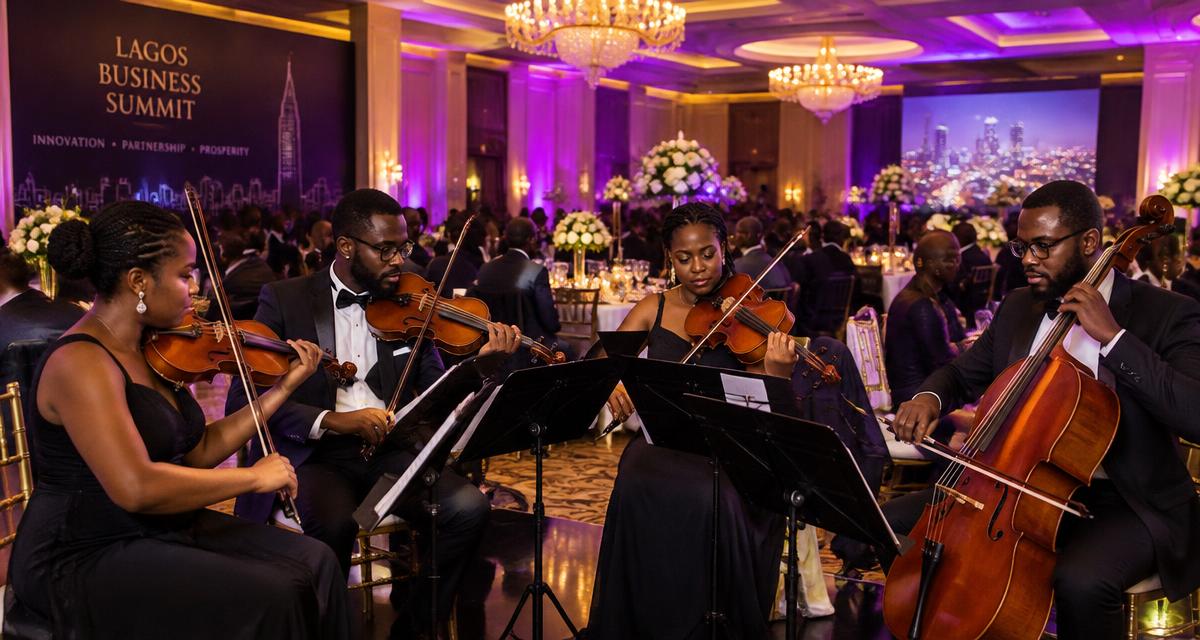
Your guests will forget the exact speech the CEO gave. They will not forget how the room felt. At a corporate gala, that feeling is built from many small details: the lighting, the food, the flow of the programme and, above all, the music.
Live music tells guests that the company invested in the night. A saxophonist welcoming people on the red carpet, a string quartet during dinner, a band that gets the finance team dancing after the awards: these are the moments that end up on social media and in the next morning's group chats.
Yet live music is often the last thing planned for corporate events, squeezed in after the venue, catering and decor budgets are fixed. This guide shows you how to plan it properly, so the music works for your brand, your programme and your guests.
What live music does for a corporate event
Before you choose a musician, be clear about the job the music needs to do. At most corporate events, it serves four purposes:
- Sets the tone. Elegant strings say "premium". A live band says "celebration". Choose the mood your brand wants to project.
- Fills the gaps. Galas have many in-between moments: arrivals, dinner service, award transitions. Live music keeps energy steady through them.
- Supports the programme. Walk-up music for award winners, a fanfare for the keynote, a soft bed under a video presentation.
- Creates shareable moments. Guests film live performances. That content markets your event and your brand.
Think of live music as part of the guest experience, not as background noise.
Choosing the right format
Different moments need different line-ups. Here are the formats that work best at Nigerian corporate events.
Solo instrumentalist (saxophone, violin, keys)
Ideal for cocktail receptions, red-carpet arrivals and smaller executive dinners. A solo saxophonist or violinist can move around the room and plays over backing tracks to cover both classic and current songs.
Duo or trio
Adds richness without taking up much space. Violin and keys, or sax and guitar, work well during dinner, when you want music that guests notice but can still talk over.
String quartet
The most elegant option, perfect for black-tie galas, premium brand launches and award dinners. Quartets can play classical pieces and modern arrangements of pop and Afrobeats songs.
Live band
The right choice when you want people on their feet. A good band can play highlife, Afrobeats, soul and pop, and can read when the room is ready to party.
Many of the best galas combine formats: a soloist for arrivals, a quartet for dinner and a band for the after-party.
Step 1: Map the programme
Start with a realistic run of show. A typical corporate gala might look like this:
- Arrivals and red carpet (45 to 60 minutes)
- Seating and opening remarks
- Dinner service
- Keynote speech or presentation
- Awards or recognition segment
- Entertainment or performance slot
- Dancing and networking
Mark each segment with the kind of music you want, the volume level and who controls the cue. This becomes the brief you share with your musicians and your event producer.
Step 2: Match the music to your brand and audience
A bank's end-of-year party for 800 staff is very different from a luxury product launch for 120 VIP guests. Consider:
- Who is in the room? Senior executives, clients, government guests, young staff, international visitors.
- What does your brand stand for? Heritage and trust, innovation, fun, exclusivity.
- Are there sensitivities? Some audiences prefer to avoid certain lyrics or genres; agree on this early.
A good musician will build a set list around your answers. Ask them to share it ahead of time so your team can review it.
Step 3: Plan sound and technical needs early
Corporate events usually have a production company handling sound, lights and screens. Your musicians need to be part of that plan from the start.
- Share your musicians' technical needs (inputs, monitors, power, stage size) with the production team.
- Schedule a sound check before guests arrive, not during the cocktail hour.
- Make sure speeches and music are balanced: music should drop smoothly when the MC speaks.
- Agree who gives cues, usually the stage manager or event producer.
A great performance through a bad sound system still sounds bad. Treat sound as part of the music budget.
Step 4: Get the timing right
Corporate programmes run long. Speeches overrun and award segments drag. Protect the evening by:
- Booking enough hours to cover the whole programme plus a buffer
- Agreeing on breaks and when they happen
- Confirming the overtime rate in writing
- Giving musicians a clear contact person on the night
Plan short, punchy music for transitions between awards. A five-second walk-up sting keeps the energy up far better than silence while winners make their way to the stage.
Step 5: Use music to tell your story
- Brand moments: ask the band to arrange your company jingle or campaign song.
- Award walk-ups: match the energy of each category, such as an upbeat Afrobeats track for the sales team.
- Cultural touch: highlife, juju or talking drum moments celebrate Nigerian heritage and delight international guests.
- The finale: end on a high with a crowd favourite everyone can sing.
Step 6: Budget wisely
Live music costs depend on the size of the line-up, the number of hours, travel, rehearsal time and custom arrangements. When planning your budget:
- Decide which moments truly need live music and which can be covered by a DJ.
- Ask for an itemised quote: performance, equipment, rehearsals, transport and overtime.
- Remember that custom arrangements (like your brand song) take preparation time.
- Request a proper invoice for your finance team.
On MyMuute, you can compare performances, see what each listing includes and get a clear invoice for your booking.
Questions to ask your musicians
- Have you performed at corporate events of this size before?
- Can we see videos from those events?
- What will your set list look like for each segment?
- What are your technical requirements, and can you send them to our production team?
- How do you handle programme changes and delays?
- What is your dress code, and can you match our theme?
- What are your payment terms, and can you provide an invoice?
Common mistakes to avoid
- Booking too late. The best musicians are booked out for end-of-year season months ahead.
- Skipping the sound check. It is the single biggest cause of poor performances.
- One format for every moment. A loud band during dinner kills conversation.
- No point of contact. Musicians need someone who can make decisions on the night.
Final thoughts
A corporate gala is a brand experience. The right live music makes guests feel valued, keeps the programme flowing and gives people something to remember and share. Plan the music alongside the programme, involve your production team early, choose the right format for each moment and get everything in writing.
Ready to plan your next corporate event? Explore performances on MyMuute, watch real videos and book the sound that fits your brand.